Introduction
I’ve spent more than a decade on the water, in tackle shops, and behind the scenes of lure manufacturing, and I pay close attention to the numbers that shape our sport. When the American Sportfishing Association dropped its 2026 Special Report on Fishing, one data point got everyone talking: total participation slid to 57 million in 2025, down from 57.9 million the year before. That’s the first year-over-year fishing participation decline we’ve seen since 2021. But the headline only tells part of the story. Digging deeper, we see record saltwater participation, a surge in diverse new anglers, and the highest “churn” rate ever recorded. Understanding what’s driving these shifts — and how the right gear, techniques, and mindset can flip the script — is something every serious angler and industry professional needs to think about.
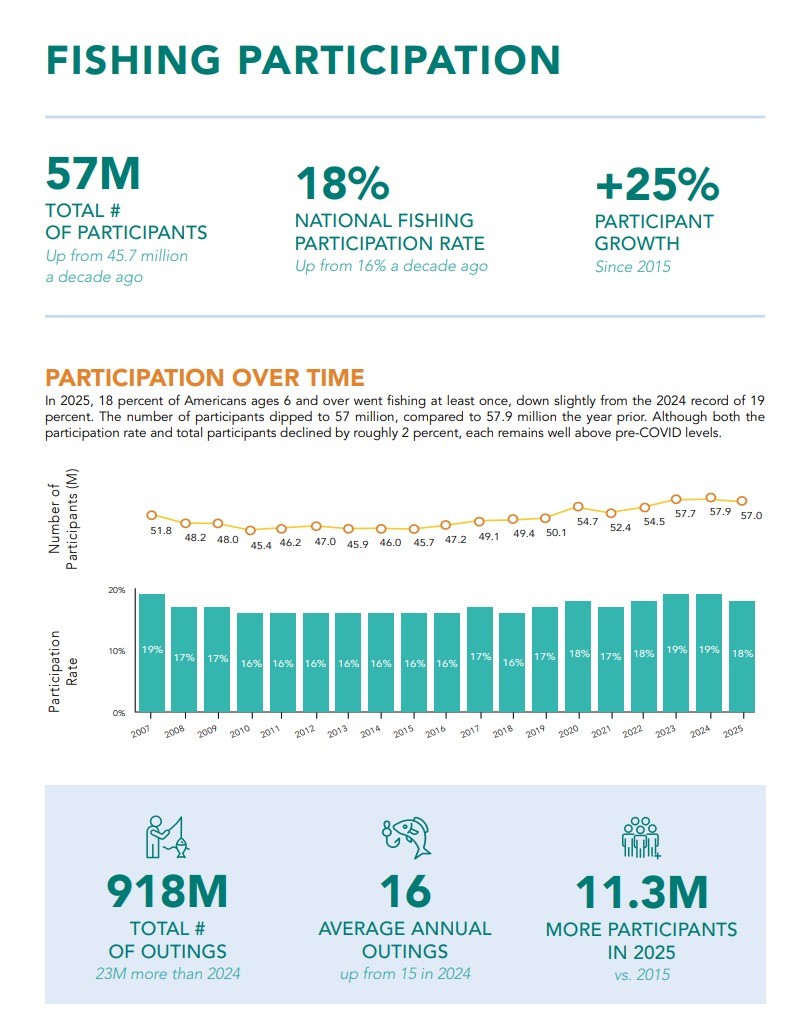
The reality is that 57 million participants still represent a nearly 25% jump from a decade ago. Long-term, the trajectory remains healthy. However, the abrupt pause in early 2025 of federal funding under the Dingell-Johnson Act’s National Outreach and Communications Program left a gaping hole in angler recruitment, retention, and reactivation (R3) efforts. This program historically funded introductory fishing clinics, marketing campaigns, and local events that put a rod in a newcomer’s hand for the first time. When that tap turned off, many potential anglers simply never found a clear path to the water.
The report breaks down exactly what motivates people to fish — enjoying nature, escaping daily stress, and spending time with family and friends rank right alongside actually catching fish. But dissatisfaction comes from crowded access points, physical discomfort outdoors, dirty water, not catching fish, and the perceived cost of gear. Notice how many of those pain points can be addressed with better planning, a little education, and the right lure selection.
Why Churn Matters Beyond the Boat Ramp
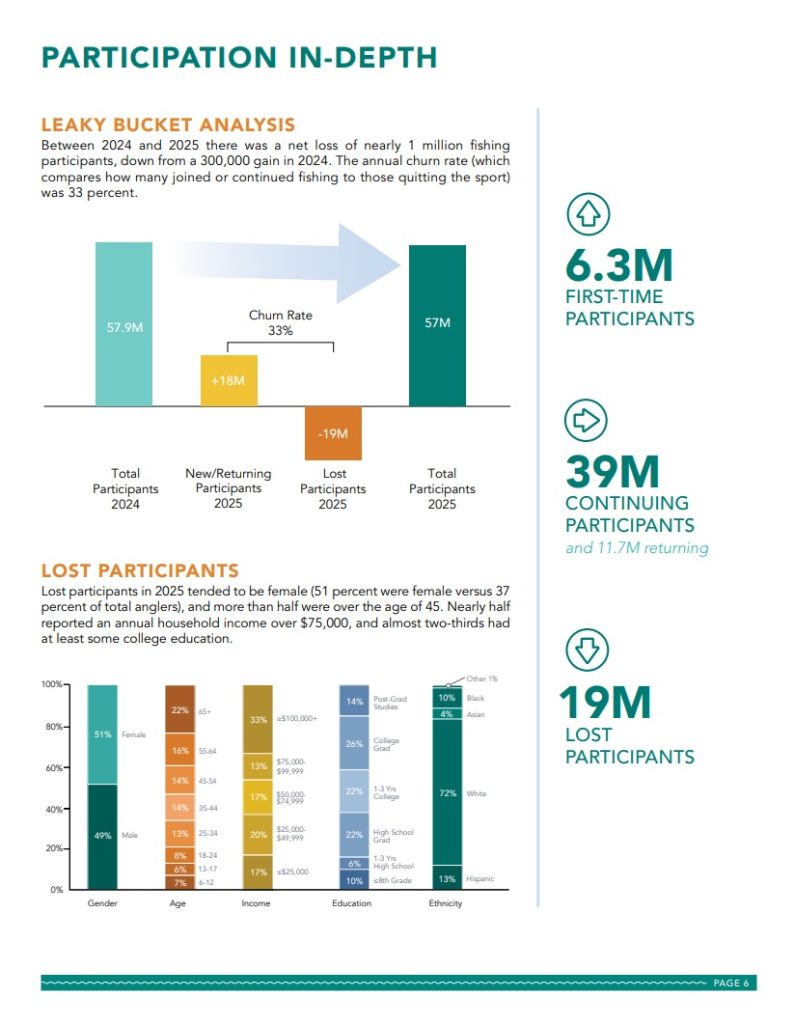
Nineteen million people dropped out of fishing in 2025, the highest churn rate on record. That’s not just a lost license sale. Under the Dingell-Johnson Act, anglers and boaters fund the bulk of fisheries conservation and public access through license fees and a 10% excise tax on sportfishing equipment. Since 1950, that system has funneled more than $12 billion into habitat improvement, boat ramps, stocking programs, and clean water initiatives. Every lapsed angler means fewer dollars for the very resources we all rely on. It’s a cycle: reduced participation leads to less funding, which degrades the fishing experience, which drives more people away.
On the flip side, the 2026 report highlights unmistakable opportunities. Saltwater fishing hit an all-time high of 15.5 million participants — the fourth consecutive record year. Black angler participation reached nearly 6 million, the highest since tracking began in 2007. Hispanic participation doubled over the past decade to 6.9 million. Female angler numbers have grown 34% in ten years, reaching 21.1 million. And 3 million Americans tried fishing for the very first time in 2025. When you look at that influx, it’s clear the appetite for fishing is there. The task is keeping those new anglers engaged past their first season.
Turning Barriers into Bites
Here’s where tackle choice enters the conversation in a big way. I’ve watched too many beginners walk into a big-box store, grab the flashiest bargain-bin lure, and head to a pressured community pond without understanding what they’re throwing. When the fish don’t cooperate after a couple of outings, frustration wins. On the other hand, an angler who learns to match a natural baitfish profile — say, a suspending jerkbait in clear water or a soft plastic swimbait rigged weedless around grass edges — catches fish more consistently. That builds confidence. Confidence leads to more trips. More trips fund conservation.
“Cost of gear” showed up as a barrier in the data, but there’s a difference between cheap gear and value-driven gear. A well-made, versatile minnow lure that runs true out of the package and holds up to toothy fish will outlast three cheap knockoffs that foul on every other cast. In the long run, spending a bit more upfront on proven designs from [Internal Link: Fishing Lure Manufacturer] reduces the recurring cost frustration.
Capitalizing on the Record Saltwater Surge
The saltwater boom is no accident. Coastal fisheries have seen strong recruitment of species like striped bass, redfish, and speckled trout in many regions, and the accessibility of inshore fishing — often from shore, kayak, or small skiff — lowers the barrier to entry. Anglers targeting these fish need lures that can handle corrosive salt, strong currents, and hard-charging predators. A slow-sinking or suspending minnow in a mullet or shrimp pattern becomes a search tool that covers water efficiently. Likewise, [Internal Link: Soft Plastic Lures] rigged on a jighead shine around oyster bars and tidal creeks. When the tackle matches the forage, the bite frequency goes up, and that’s how you hook a newcomer for life.
Keeping the Next Generation on the Water
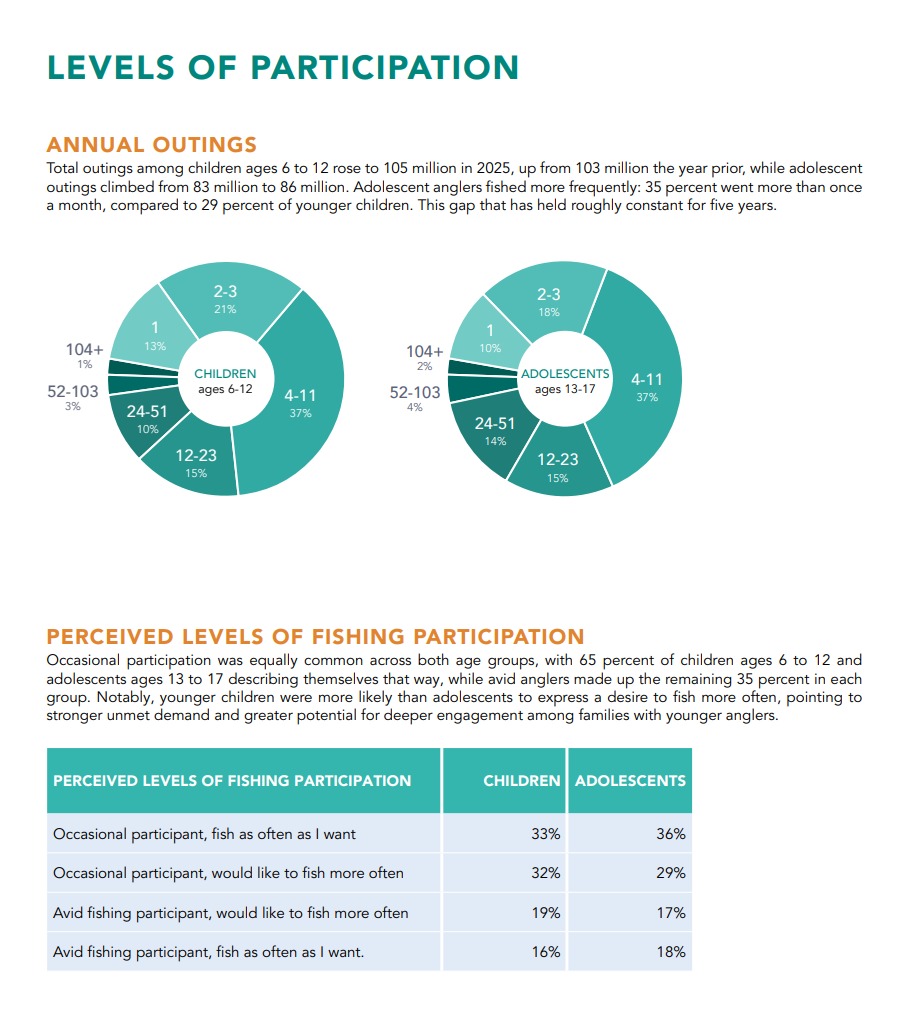
Eighty-six percent of current participants fished before age 12. That stat alone is why youth programs matter so much. The 2026 report showed a slight dip in the 6-12 age bracket, but participation among ages 13-17 rose. This tells us that if we can get a kid to stick with fishing through those early teen years, they’re likely to become lifelong anglers. From a tackle perspective, kids need manageable gear and baits that produce action even with imperfect retrieves. Inline spinners, pre-rigged soft plastics, and small floating minnow lures that dive and wobble with a simple straight retrieve keep the experience positive. [Internal Link: Minnow Lures] that work at various speeds cover up the sloppy cadence of a young angler and still draw strikes.
Practical Fishing Tips
- Match the Forage in Your Water: Before you tie on, check the primary baitfish. In clear lakes, natural patterns like silver, shad, or blueback herring excel. In stained water, lures with a bit of chartreuse or gold flash improve visibility.
- Downsize Under Pressure: If you’re fishing a spot the ASA data would classify as “crowded,” the bass or inshore predators have seen every full-sized plug in existence. Drop to a smaller profile — a 2.5-inch minnow or a finesse soft plastic — and slow your retrieve to give fish a more subtle look.
- Seasonal Adjustments Matter: During the spring spawn, a suspending lure that hangs in a bedding zone can trigger defensive strikes. In summer, fish shift to deeper weedlines or drop-offs; a weighted soft plastic or a deep-diving crankbait keeps your offering in the strike zone longer.
- Budget Tactically: If cost is a concern, build a small quiver of three lure categories — a topwater, a suspending minnow, and a soft plastic swimbait — rather than a box full of niche specialty baits. Those three will handle 80% of the situations an average weekend angler faces.
Common Mistakes
- Buying Lures Based on Packaging, Not Conditions. A neon-green crankbait might look great on the peg, but if your lake holds clear water and heavily pressured bass, it likely spooks more fish than it catches. Read the water first, then choose the bait.
- Ignoring Lure Action and Depth Control. Simply casting and reeling a floating minnow at one speed without letting it pause or vary direction kills its effectiveness. Most baitfish don’t swim in a robotically straight line.
- Neglecting Terminal Tackle and Knots. You can fish the perfect lure, but if the knot slips or the split ring opens on a good fish, you’ve just created a negative experience that adds to churn. Check leaders and rings, especially in saltwater.
- Skipping Intro Programs While They Exist. Even with federal R3 funding interrupted, many state agencies and local shops still run clinics. Not taking advantage of these keeps new anglers stuck on the learning curve longer.
FAQ
Q: Why did fishing participation decline in 2025 despite the long-term growth trend?
A: The ASA attributes the drop to several converging factors: a record 19 million lapsed anglers, the abrupt pause of Dingell-Johnson funded outreach programs, rising cost-of-living pressures that made gear feel expensive, and increased competition for leisure time. Even though 3 million first-timers entered the sport, retention couldn’t keep pace.
Q: What is angler churn and why should I care about a 19-million-person figure?
A: Churn is the number of people who fished one year but did not fish the following year. High churn matters because license sales and the 10% excise tax on tackle directly fund boat ramps, fish stocking, habitat work, and water access. More lapsed anglers equal fewer conservation dollars, which eventually harms the quality of fishing for everyone.
Q: How does the Dingell-Johnson Act funding pause affect the average weekend angler?
A: It primarily reduces introductory and educational events that get people started. Fewer learn-to-fish days, casting classes, and community marketing efforts mean new anglers lack the support network to overcome early frustrations. That makes it harder for them to progress, and many simply drop out.
Q: I am worried about the cost of gear being a barrier. What should my first serious lure purchase be?
A: Start with a versatile suspending or slow-sinking minnow lure in a 3- to 4-inch baitfish pattern. It can be worked from the surface down to mid-depth, mimics everything from shad to small perch, and stays in the strike zone longer during cold-front conditions when fish are sluggish. It’s the closest thing to a year-round, multi-species tool in freshwater and inshore saltwater.
Q: How can I personally help reverse the participation decline?
A: Take someone fishing. Mentor a kid, a co-worker, or a neighbor. Pair that invitation with simple, reliable gear — a rod, a small box of proven lures, and a spot with a realistic chance at action. Word-of-mouth mentorship is the most powerful R3 program that no funding pause can kill.
Conclusion
The 2026 data offers an honest check on our sport: growth has stalled, churn is at record levels, and the infrastructure that supports new angler recruitment got disrupted. Yet the foundation for a strong rebound is concrete. Saltwater fishing is booming. A more diverse, younger generation of participants is already here and ready to fish more. The desire is there — 99% of those who fished in 2025 plan to fish again in 2026. What we do between now and then, both as individual anglers and as an industry, will determine whether that intention turns into actual trips. Matching the right lure to the right situation, mentoring a beginner, supporting quality tackle from [Internal Link: Wholesale Fishing Lures] that holds up over time — these are the small, practical moves that keep people casting, catching, and contributing to conservation for another decade of growth.