Introduction
The fall smallmouth blitz is one of freshwater fishing’s most explosive events, yet many anglers miss it entirely. As summer gives way to Indian summer mornings, baitfish begin their downstream migration, and river smallmouths shift into full predatory mode. You don’t need forward-facing sonar or high-tech electronics to cash in on this seasonal feeding frenzy. What you need is an understanding of why the blitz happens, where it unfolds, and which traditional lures trigger the most savage strikes. This guide covers the timing, location patterns, and proven lure presentations that still outfish modern gadgetry when the surface starts boiling.
What Triggers the Fall Smallmouth Blitz
Every year, juvenile blueback herring, American shad, and alewives—collectively referred to as herring—begin a downstream journey from the East Coast’s larger river systems toward the Atlantic. These baitfish hatch in the spring, spend the summer feeding and growing in tributaries, and reach roughly three inches by late August. That size threshold matters.
According to research conducted by the Hudson River Estuary Unit of the New York State Department of Environmental Conservation, three factors initiate the migration. Fisheries biologist Kathy Hattala explains that young herring begin moving once they reach approximately fifty to sixty millimeters in length. Water temperature and photoperiod—the length of daylight—also serve as triggers. As days shorten and water cools slightly, the baitfish get the signal to move.
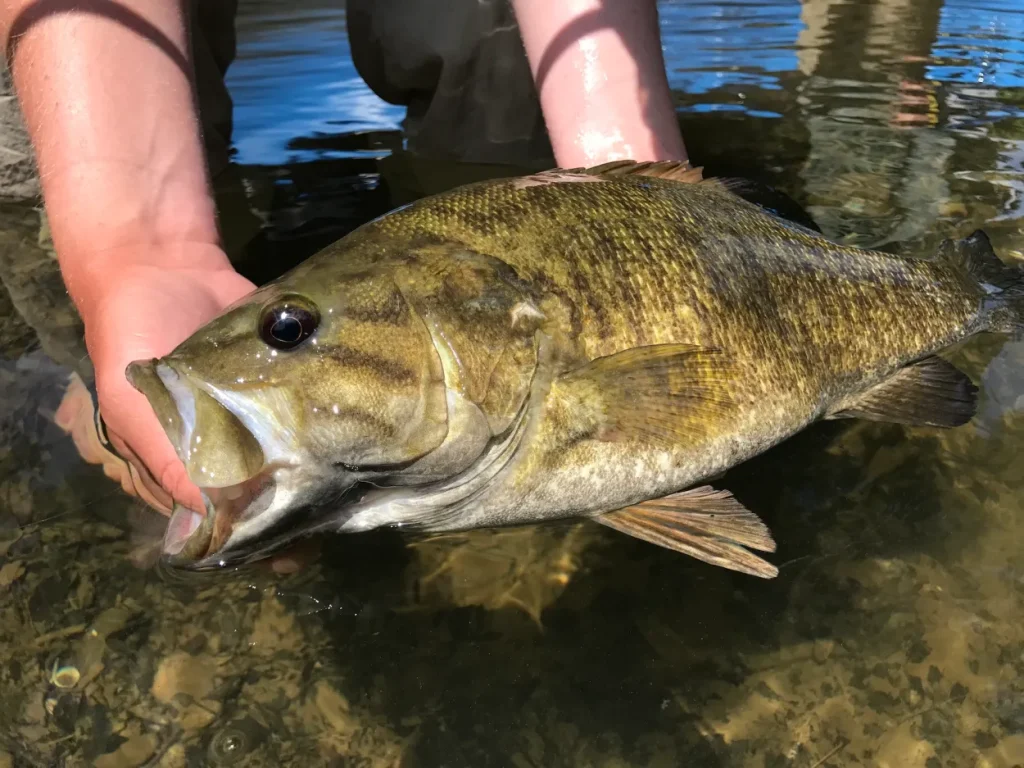
For smallmouth bass, this migration represents an enormous feeding opportunity. Rather than picking crayfish off rocky structure, smallmouths abandon bottom-oriented foraging and push toward the surface to intercept dense schools of vulnerable baitfish. The action typically starts in late August at northern latitudes and runs through September or into early October, with the first two weeks of September usually offering the most reliable fishing. The fall smallmouth blitz is on.
[Internal Link: Fishing Knowledge Center]
Where to Find River Smallmouths During the Herring Run
Big rivers intimidate many anglers. Several hundred yards wide and potentially hundreds of miles long, they present a lot of water to dissect. But the migration narrows things down considerably if you know what to look for.
Dams and Tailraces
Hydroelectric and navigational dams funnel herring into concentrated areas. Baitfish passing through turbines often emerge injured or disoriented, creating easy pickings for smallmouths that stack up in the tailrace below. Position your boat to cast upstream and work crankbaits, spinnerbaits, and minnow baits downstream along current seams where fast water meets slack eddies.
Locks on navigational dams also move bait. Bass station below locks and along riprap banks immediately downstream, waiting for herring to flush through with boat traffic. These areas hold fish consistently throughout the migration period.
[Internal Link: Minnow Lures Category]
Natural Funnels and Ambush Points
Beyond man-made structures, smallmouths gravitate to natural features that concentrate migrating baitfish:
- River narrows: Constricted sections funnel herring into tighter columns. The downstream side of a narrows typically fishes best because baitfish become disoriented after passing through the fast water.
- Shallow flats adjacent to channels: Baitfish feel safer in skinny water, but shallow depth also compresses the school vertically, removing escape routes. Smallmouths positioned in deeper water adjacent to the flat rush up and attack. These flats are prime topwater territory during low-light periods.
- Creek mouths: Herring schools use tributary mouths as staging areas. Storm drains and drainage ditches function the same way and are often overlooked by anglers.
- Island points: Upstream points of mid-river islands deflect current and create eddy zones where baitfish pause. Bass know this and hold on the seam waiting for an easy meal.
Topwater Lures That Trigger the Biggest Strikes
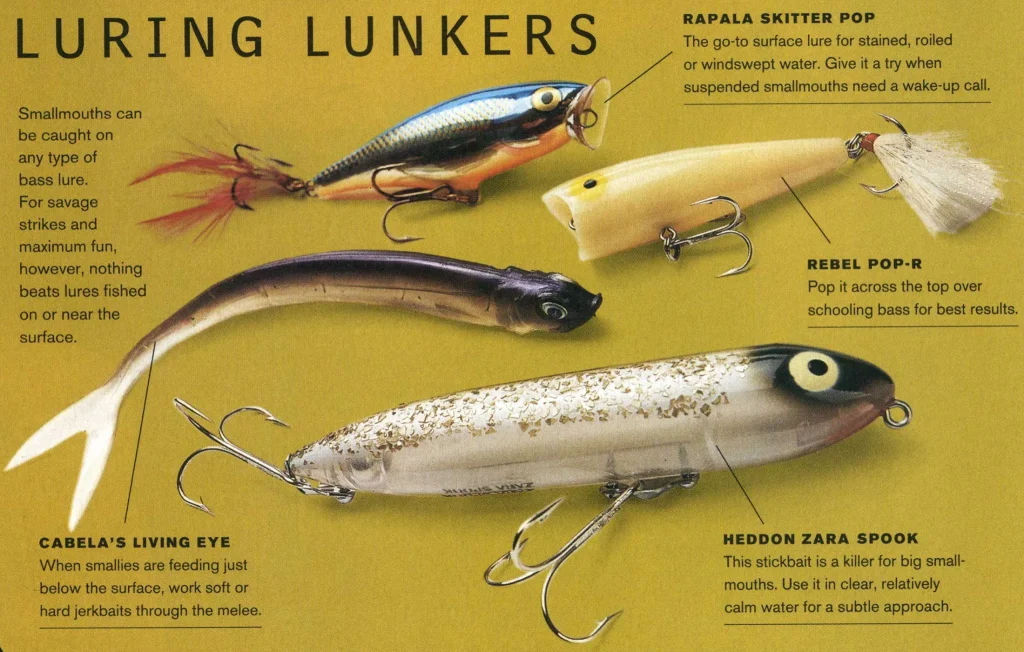
Smallmouths eat nearly any bass lure during the blitz, but surface presentations deliver the visual excitement and draw strikes from the largest fish in the school. Here is a breakdown of proven options:
| Lure | Best Condition | Presentation Notes |
|---|---|---|
| Rebel Pop-R | Schooling bass over open flats | Aggressive chugging cadence; pause after each pop |
| Rapala Skitter Pop | Stained or windswept water | Louder popping action wakes suspended fish |
| Heddon Zara Spook | Clear, calm water | Subtle walk-the-dog retrieve for wary big smallmouths |
| Cabela’s Living Eye Jerkbait | Fish feeding just below surface | Worked with erratic twitches through the melee |
When smallmouths herd baitfish toward the surface, the bass often injure more herring than they immediately eat. Wounded baitfish flutter near the surface, and smallmouths circle back to pick them off. A popping lure or walking topwater matches this profile perfectly. The key is landing your cast in the center of the disturbance and starting the retrieve immediately—hesitation costs strikes.
Tackle Recommendations for the Fall Smallmouth Blitz
The right gear makes a difference when you’re casting into surface explosions and need immediate hooksets.
Spinning Setup
For lighter jerkbaits and topwaters, a 6-foot-3-inch medium-action spinning rod paired with a 2000-size spinning reel loaded with 8-pound-test line handles the job. This setup casts small poppers accurately and provides enough backbone for river smallmouths that use current to their advantage.
Baitcasting Setup
When throwing heavier topwaters like the Zara Spook or larger walking baits, step up to a medium-heavy baitcasting rod with a low-profile baitcasting reel spooled with 12-pound-test line. The added power helps you control fish that strike at close range and immediately run for the channel.
Fly Rod Option
For fly anglers, a 7- or 8-weight rod is the right tool. A longer rod makes casting from a boat easier and helps pick up line quickly. Match it with a weight-forward floating line in a bass or saltwater taper for surface poppers. Keep a spare spool with a 10-foot medium-sink tip ready for streamers when fish move deeper.
Time-of-Day Tactics
Light level drives smallmouth behavior during the blitz. Bass feel more comfortable hunting in low light, which is why the most aggressive surface activity happens early.
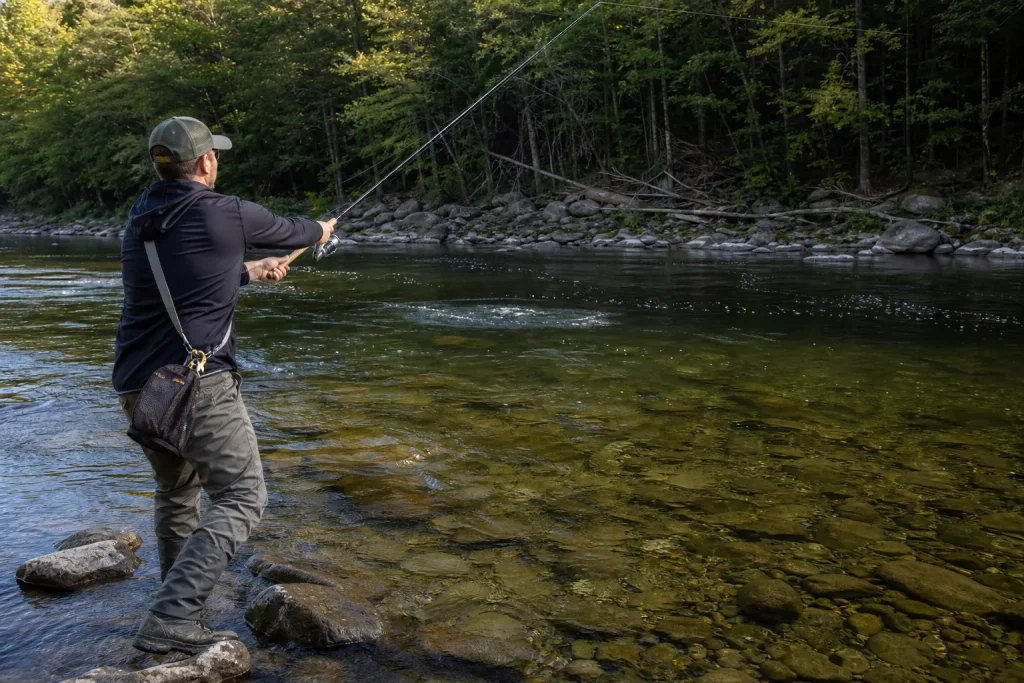
Dawn through early morning: This is prime time. Before direct sunlight hits the water, bass charge baitfish with abandon. Look for expanding rings and surface disturbance on flats. Move quickly, keep your distance reasonable, and fire your cast into the action the moment you spot it.
Mid-morning: As the sun climbs, surface bites fade. Smallmouths shift to shaded areas and shallow flats with slightly deeper water nearby. Switch to hard jerkbaits like the Smithwick Rattlin’ Rogue or soft jerkbaits such as the Lunker City Fin-S Fish. Work them with sharp twitches and pauses just below the surface.
Early afternoon: Except on overcast days, the best bite moves deeper. Target channel dropoffs and deeper holes adjacent to flats. If fish refuse to rise for a jerkbait, switch to crankbaits, bucktail jigs, or swimming-tail grubs that can be worked through the lower water column.
Understanding this daily progression helps you stay on fish from sunrise to late afternoon without electronics or guesswork.
[Internal Link: Lure Retrieval Techniques]
Practical Fishing Tips
- Watch for the rings. During late August through September, the surface disturbance created by smallmouths attacking herring schools is visible from a considerable distance. Train your eyes to spot small rings that expand into wider disturbances.
- Approach quietly. Schooling smallmouths during the blitz are focused on herring, but that doesn’t mean they tolerate boat noise. Shut down the outboard well outside the action and use the trolling motor for final approach.
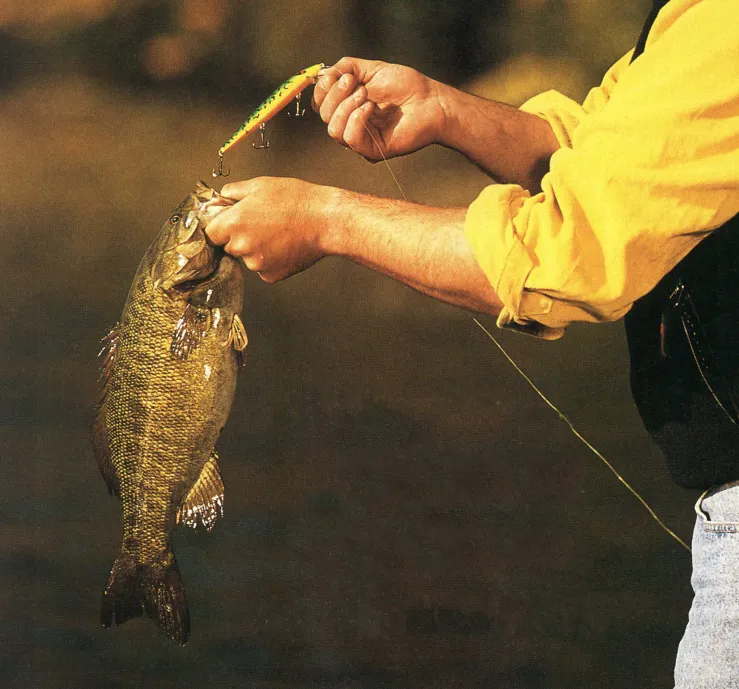
- Keep a follow-up lure ready. If a bass misses your topwater, have a soft jerkbait tied on another rod. Throw it immediately into the same area—wounded fish often stay close.
- Fish current seams below dams. Herring get disoriented after passing through turbines. Bass sit in the slack water next to the fast current, picking off baitfish that drift by. Cast upstream and bring your lure downstream with the current.
- Don’t ignore cloudy days. Overcast conditions extend the surface bite by hours. Smallmouths stay aggressive much longer when direct sunlight is blocked.
Common Mistakes
- Fishing too fast after a miss. When you miss a strike or the bass boils on your lure without hooking up, the temptation is to burn the lure back and cast again. Instead, let it pause. Smallmouths often return for a second swipe.
- Ignoring creek mouths and storm drains. Anglers focus on dams and main-channel structure while smallmouths are staged at tributary mouths waiting for herring to rest there. These spots reload with fish all day.
- Using only topwater lures all day. The surface bite fades as the sun rises. Refusing to switch to jerkbaits, crankbaits, or jigs means missing the deeper bite that develops by midday.
- Fishing too far from the action. Long casts give fish time to move. During a blitz, you want your lure landing in the thick of the disturbance. Position the boat within comfortable casting range before making your first cast.
- Overlooking smaller rivers. The largest rivers get most of the attention, but tributary systems and mid-sized rivers with herring runs hold excellent smallmouth fishing. The blitz happens there too, often with less fishing pressure.
FAQ
Q: What causes the fall smallmouth blitz?
A: The blitz is triggered by the downstream migration of juvenile herring—blueback herring, American shad, and alewives. Once these baitfish reach about fifty to sixty millimeters in length, water temperature and shortening daylight signal them to move toward the ocean. Smallmouths intercept the migrating schools and feed aggressively near the surface.
Q: When is the best time to fish the fall smallmouth blitz?
A: The action typically starts in late August and continues through September or early October. The first two weeks of September usually offer the most consistent fishing. Dawn through early morning is the best time of day, especially for topwater presentations.
Q: What lures work best during the smallmouth blitz?
A: Topwater lures such as the Rebel Pop-R, Rapala Skitter Pop, and Heddon Zara Spook excel when bass are feeding on or near the surface. As the sun rises, switch to hard or soft jerkbaits. In deeper water, crankbaits and bucktail jigs produce.
Q: Where should I fish during the herring migration?
A: Focus on tailraces below hydroelectric dams, riprap banks below locks, river narrows, shallow flats adjacent to channels, creek mouths, and upstream island points. These areas concentrate both baitfish and feeding smallmouths.
Q: Can I catch smallmouth bass during the blitz without forward-facing sonar?
A: Absolutely. The blitz is a visual event. You can locate feeding fish by watching for surface rings, swirls, and baitfish scattering. Traditional maps of river structure and careful observation will put you on fish without electronics.
Conclusion
The fall smallmouth blitz is one of the most predictable big-fish events in Northeastern rivers, yet it remains overlooked by many bass anglers. When herring begin their downstream migration, smallmouths abandon their usual haunts and go on a surface-oriented feeding spree that lasts for weeks. You don’t need forward-facing sonar or sophisticated electronics to find these fish. You need to understand the migration triggers, know where baitfish concentrate, and present the right topwater or jerkbait at the right time.
From tailraces below hydroelectric dams to shallow flats at dawn, the patterns are consistent year after year. Surface lures like the Rebel Pop-R and Heddon Zara Spook draw strikes from the biggest smallmouths in the river. As conditions brighten, shifting to jerkbaits and then deeper presentations keeps you connected. The next time cooler nights arrive and the days grow shorter, watch for the rings spreading across the surface. The fall smallmouth blitz is happening, and the old school approach still works as well as ever.
[Internal Link: Bass Fishing Lures]