Introduction
Surface flies built with tightly packed deer belly hair have been drawing explosive strikes from largemouth and smallmouth for more than a century. If your grandfather fished a lake in the 1940s or ’50s, chances are he had a chunky hair bug gurgling across a weedbed while he worked the long rod. Modern bass anglers tend to reach for foam or balsa topwaters—they’re cheaper, mass-produced, and easy to find. But those who still dedicate themselves to hair bug bass fishing understand something that materials science can’t easily replicate: a well-tied deer hair bug feels alive in a fish’s mouth, rides impossibly low in the surface film, and produces a wake that triggers strikes when every other commotion fails.
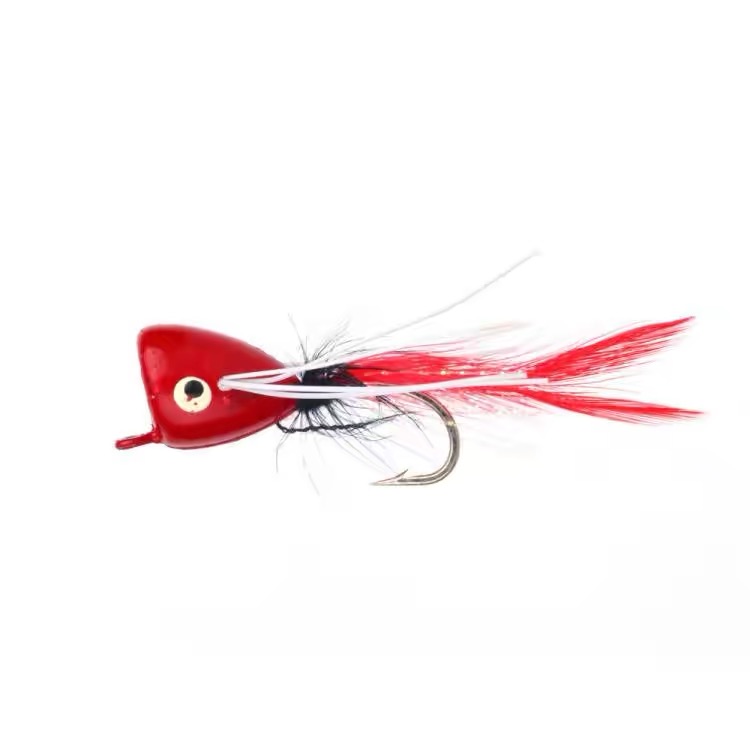
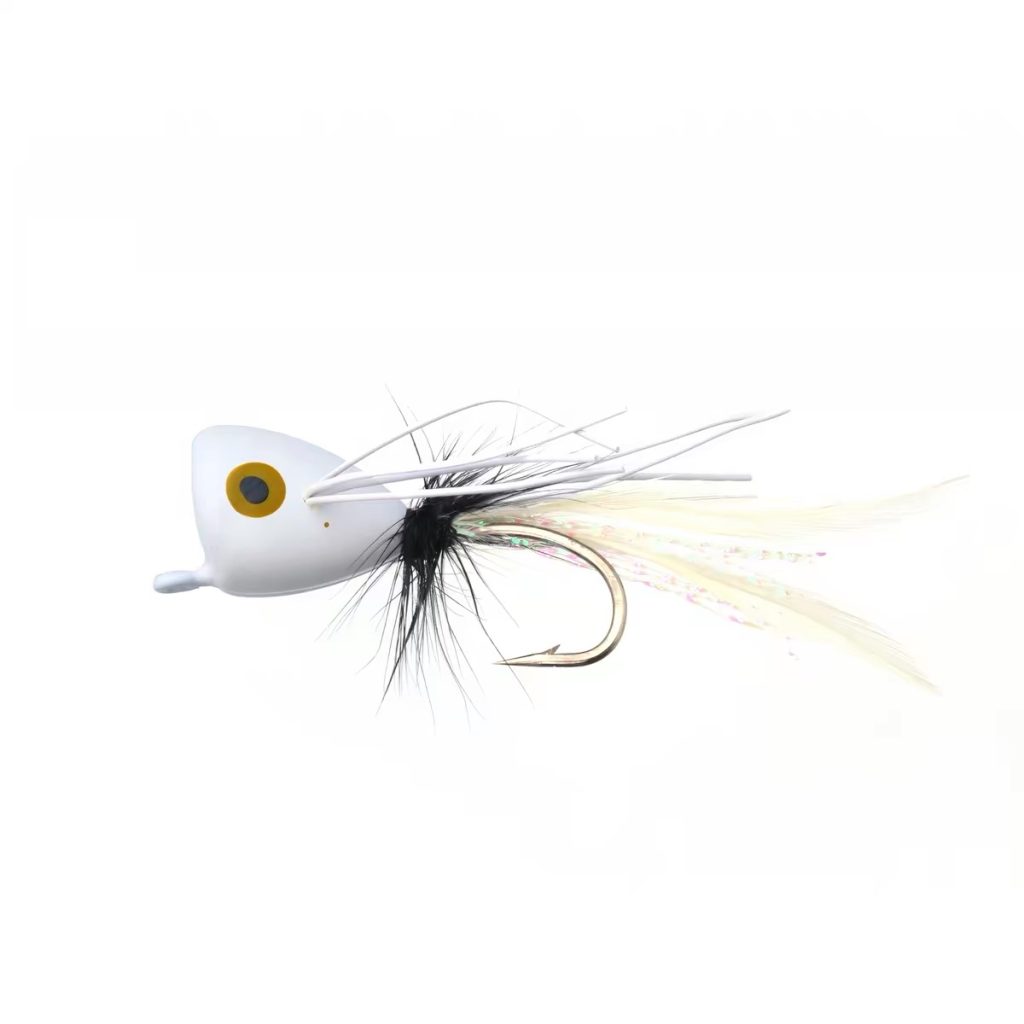
The pattern shown below is built exactly this way — [Hand-Tied Popper Fly]
Custom tyer Brandon Bailes has spent years perfecting the spun deer hair patterns that serious bass fly anglers trust. He’s known for bugs that are as much functional tools as they are art pieces, and he’d rather you fish them than frame them. This guide unpacks what makes a high-quality hair bug work, when subtlety beats aggression, and how the right rod choice can turn a three-pound bass into a six-pound fight.
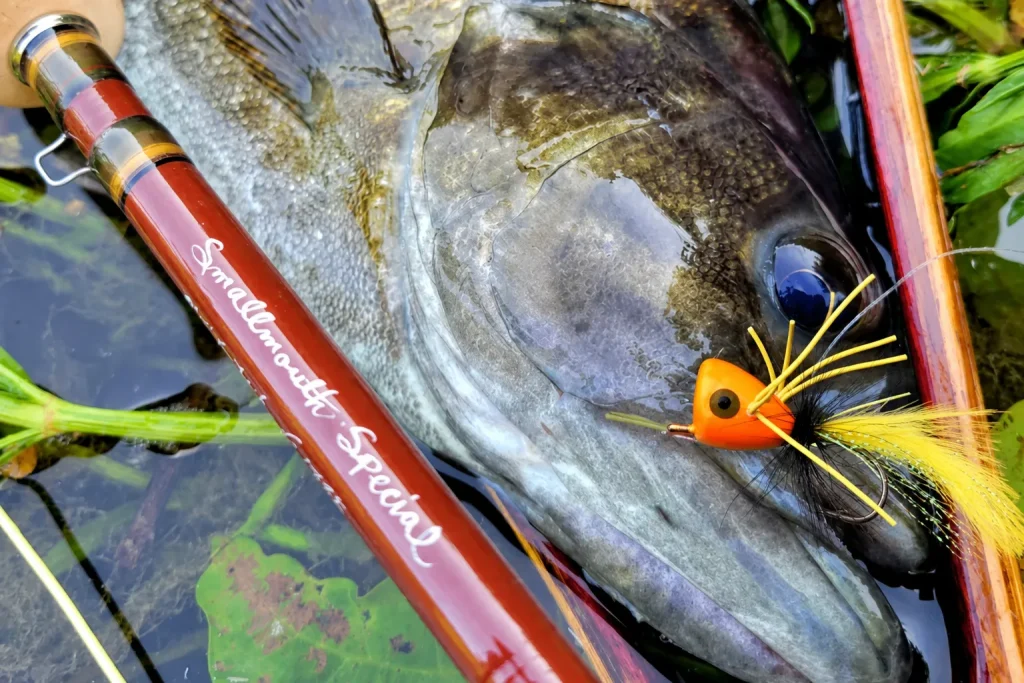
What Separates a Killer Deer Hair Bass Bug from an Average Popper
Deer belly hair is the core ingredient in any top-tier hair bug. It’s hollow, buoyant, and traps air far better than bucktail, which should never be used as a substitute. Body hair can work, but the belly hair’s unique structure gives the fly a natural compressibility. When a bass clamps down, the hair collapses slightly, and Bailes is convinced that this sensation causes fish to hold on just a split second longer—long enough for a solid hookset.
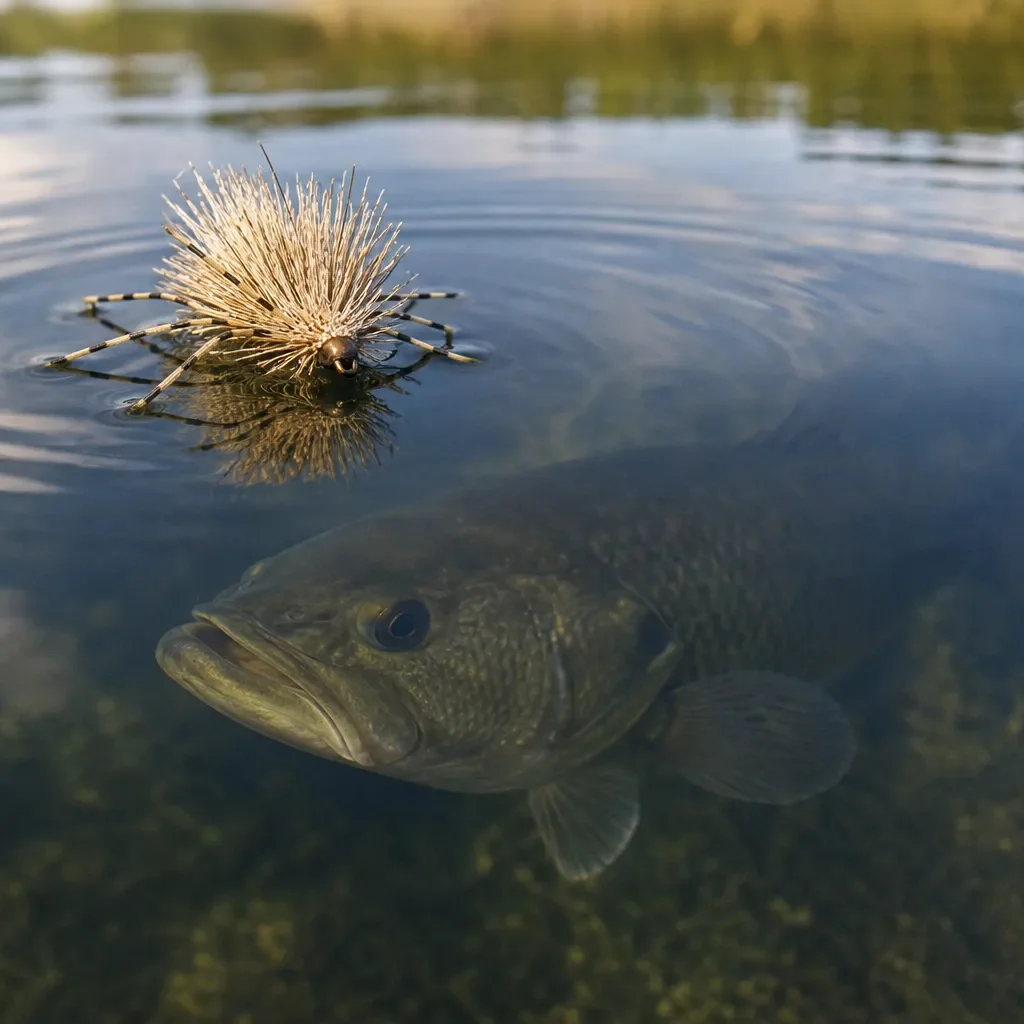
The tying process matters enormously. Each clump of hair must be packed onto the hook shank with intense pressure; tightly packed hair creates a denser, more durable fly that floats higher and resists spinning on the shank. Mass-produced hair bugs often cut corners, using thinner bucktail or sparse wraps that eventually waterlog and sink. A custom bug, tied with aggressive packing, will ride in the surface film with most of its bulk submerged—pushing a subtle wake rather than skittering on top like foam. This low-riding profile presents a very different picture from below, mimicking a struggling frog or a large terrestrial insect that’s fallen in and can’t scramble back out.
[Internal Link: Topwater Lures for Bass]
The Retrieve: Why Less Movement Gets More Eats
A common instinct when fishing a popper is to make it pop—hard. While noise has its place in stained or high water, summer bass in typical clear conditions often react poorly to aggressive chugging. A hair bug’s real magic comes from doing almost nothing. Bailes advises anglers to make their cast, let all the rings disappear, and then begin a retrieve so slow that the only visible action is the subtle twitch of rubber legs or a marabou tail.
This subdued presentation resonates during the dog days when water clarity sharpens and bass turn sluggish by midday. An overworked topwater can send fish scurrying, but a hair bug barely breathing on the surface suggests an easy, injured meal that won’t escape. In clear water, a quiet bug that quivers in place often converts curious followers into takers better than any obnoxious bloop.
[Internal Link: Lure Retrieval Techniques]
The Forgotten Gear Advantage: Fiberglass Rods
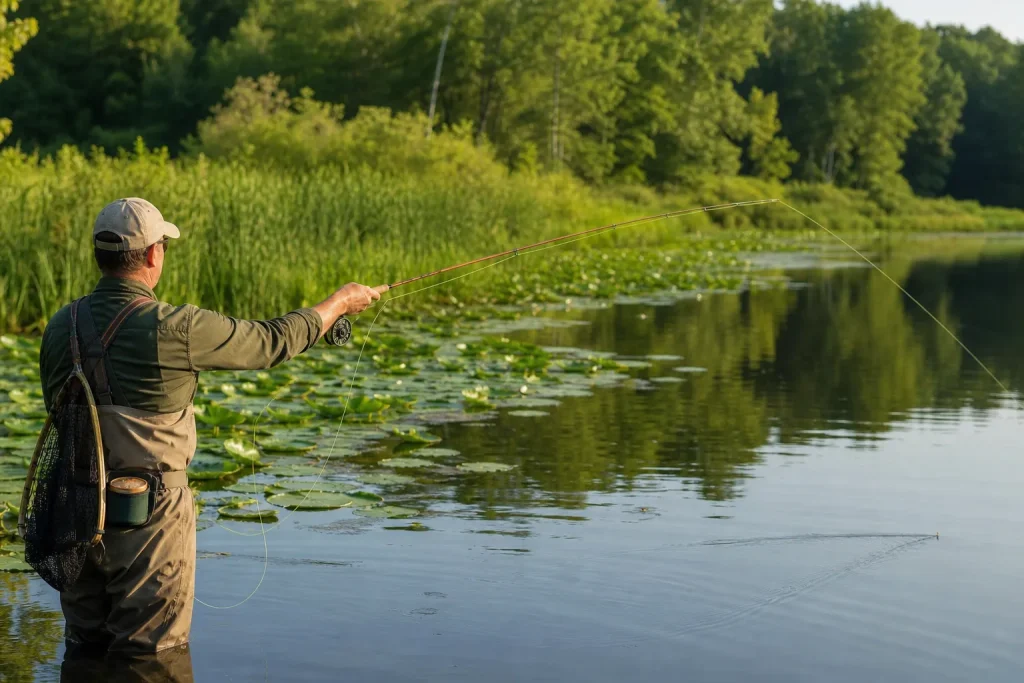
Hair bugs are bulky and air-resistant; once soaked, they can feel like casting a wet sock. Standard 9-foot 5-weight graphite rods struggle to deliver them accurately. A 7- or 8-weight provides the necessary line speed, but Bailes points to fiberglass as the ideal platform. Glass rods, the standard for decades before graphite took over, have seen a resurgence—not for nostalgia, but because their soft, deep-loading action functions as a shock absorber and a springboard.
A fiberglass fly rod bends deep into the butt section under load, storing more energy and releasing it smoothly. This helps turn over a wind-resistant hair bug without requiring the caster to muscle the stroke. Once a fish eats, that same softness protects light tippets and makes a three-pound largemouth feel substantially larger. Graphite users accustomed to crisp, fast actions will need to slow their stroke to let the glass load, but the payoff is better presentation, fewer pulled hooks, and pure fun.
[Internal Link: Fishing Knowledge Center]
Practical Fishing Tips
- Choose bugs tied with dense, tight packing: Inspect the head for gaps. Squeeze a finished bug—if it feels spongy rather than solid, it will waterlog quickly.
- Match the hook gap to your target: A heavily dressed hair bug can impede hook penetration. Select patterns with wide-gap hooks if you’re chasing bigger bass.
- Fish a bug that rides low: When testing a new pattern, drop it in shallow water and observe its posture. The best hair bugs sit with the hook point below the surface and only the very top of the head visible.
- Carry dry shake or powder floatant: While good deer hair floats well, a quick treatment after a fish crush can restore buoyancy and keep the bug in the zone.
- Adjust leader length for conditions: In ultra-clear summer water, a 9- to 12-foot leader tapered to 10–14-pound-test helps keep the fly line from spooking fish.
Common Mistakes
- Over-popping the bug: In clear, calm water, an aggressive retrieve often spooks bass. Start with barely visible movements; only add noise if fish ignore the bug or conditions turn murky.
- Using the wrong hair: Bucktail-packed flies lose buoyancy fast and don’t produce the same natural collapse when eaten. Stick to deer belly hair bodies.
- Under-gunning the rod: Trying to throw hair bugs on a 5-weight leads to tailing loops and frustration. Step up to a 7- or 8-weight or a glass rod that loads easily with heavy flies.
- Ignoring fly orientation: A bug that spins or tilts on the retrieve will twist your leader and look unnatural. High-quality ties maintain a keel-like orientation.
- Expecting the same performance all day: A well-fished hair bug absorbs water slowly. Rotate through two or three bugs, letting one dry on a patch of foam while you fish another.
FAQ
1. Can I fish deer hair bass bugs with conventional spinning or baitcasting gear?
Absolutely. While they’re designed for fly tackle, a hair bug can be fished under a casting bubble or even behind a small clear float on spinning gear. The same subtle retrieve principles apply, though you’ll lose some of the finesse a fly rod offers.
2. Why does a hair bug feel more natural to a bass than foam?
Deer belly hair has a texture and slight compressibility that foam and balsa lack. When a bass crushes it, the fly gives just enough to mimic a live creature, encouraging the fish to hold on marginally longer—often the difference between a hookup and a missed strike.
3. Do I need a custom-tied hair bug, or will mass-produced versions work?
Mass-produced bugs catch fish, but they often use bucktail or sparse packing, which reduces durability and floating life. A tightly packed custom deer hair bug lasts longer, rides better in the film, and delivers more consistent hook-ups. If you fish hair bugs regularly, the upgrade pays for itself.
4. When is a loud, aggressive popping retrieve the right call?
Use a noisy retrieve when the water is stained, high, or after a rain has flushed in color. In those conditions, bass rely more on sound and vibration to locate prey. Otherwise, keep it quiet.
5. What’s the best time of year to throw hair bugs for bass?
Late spring through late summer is prime, especially during the early morning and evening hours. During midday heat, focus on shady cover and use a dead-slow presentation. Hair bugs also shine during bluebird, post-frontal days when bass are tight to cover and reluctant to chase.
Conclusion
Hair bug bass fishing isn’t just a nod to angling history—it’s a tactical edge when bass get pressured and water clears. A properly tied deer hair bug combines a lifelike feel in a fish’s mouth with a unique subsurface ride that foam poppers can’t replicate. When you slow down, let the bug do the work, and match it with a fiberglass rod that loads deeply and protects your tippet, you’ll turn hot summer days into memorable topwater sessions. If you’ve only thrown hard poppers and foam frogs, adding a few custom hair bugs to your arsenal will give you a stealthy alternative that often outproduces louder lures when it matters most.
[Internal Link: Bass Fishing Lures]