Introduction
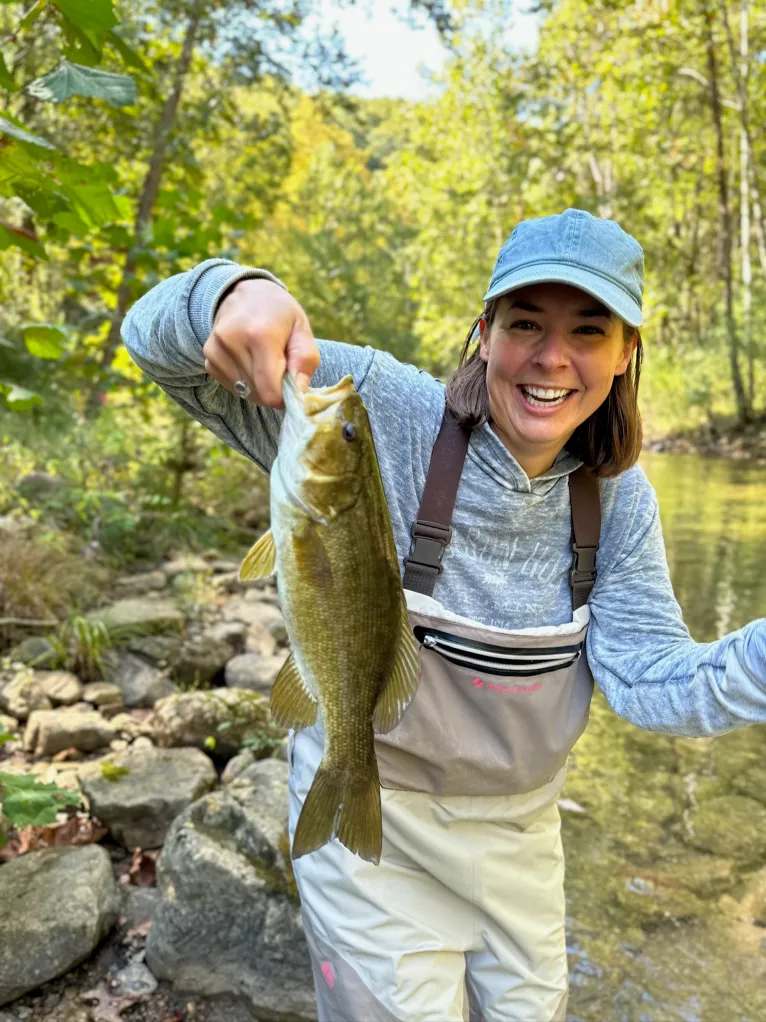
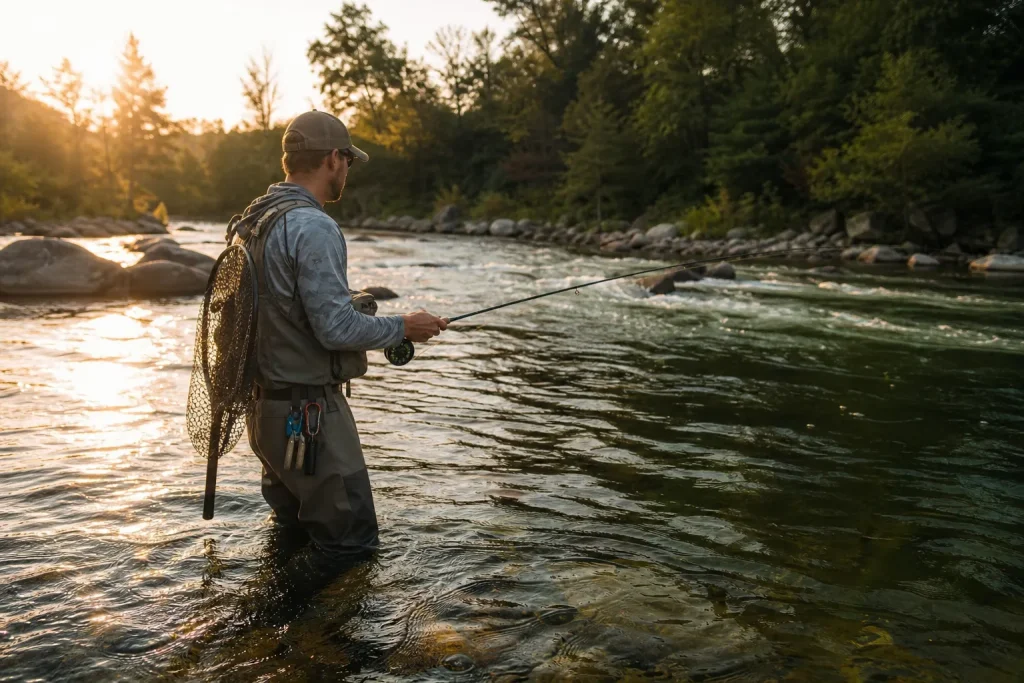
Warmwater fly fishing has exploded in popularity, and while muskies and largemouth bass grab plenty of social media headlines, smallmouth bass have quietly become one of the most sought-after fly-rod targets. For anglers who have been chasing bronzebacks on the fly for years, there’s a growing sense that these fish are finally getting their due. But much of what you see online revolves around Midwest rivers where a drift boat or raft is essential to cover water effectively. Not all of us have that kind of access—or a river big enough to float. What many anglers do have is a wade-friendly smallmouth stream or river close to home that begs to be fished with flies. Wade fishing for smallmouth bass is a different game than drifting, demanding a more deliberate approach to reading water, selecting flies, and presenting them. With the right strategy, you can turn those walk-in spots into consistent producers.
The Wading Mindset: Think Like a Trout Fisherman
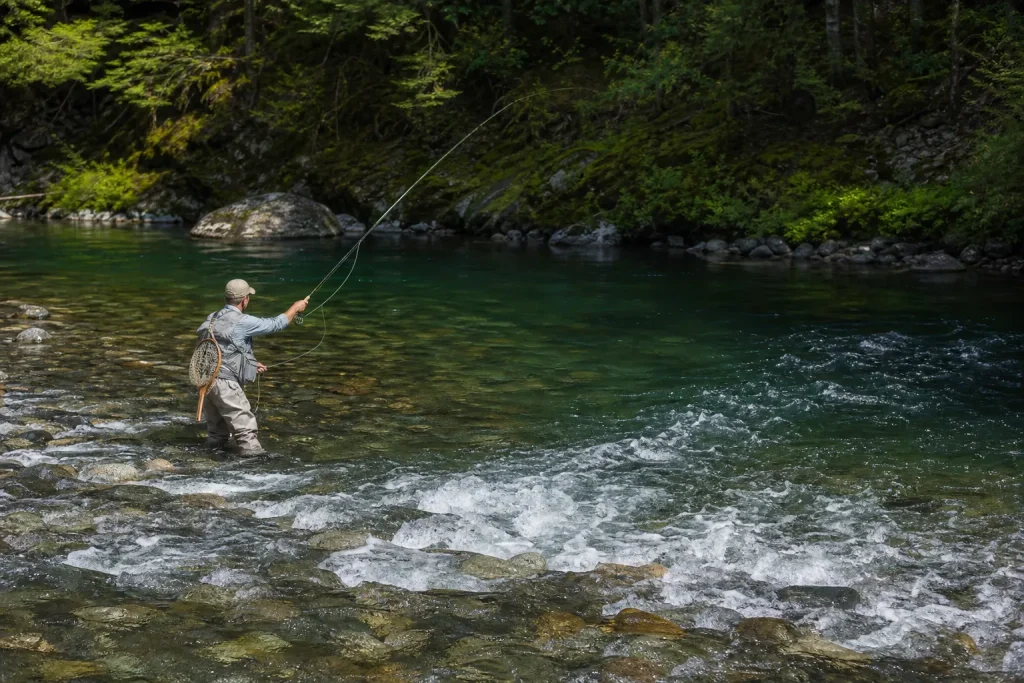
Casting from a boat allows you to cover miles of river, drifting surface flies along banks and over ledges with ease. On foot, that wide-ranging approach evaporates. You simply can’t blanket water the way you can with a spinning rod and a Rebel Pop-R. Instead, wade fishing for smallmouth bass forces you to be selective and precise—much like trout fishing.
Jacob Ott, a West Virginia guide who spends as many days wading the Greenbrier River as he does floating the famed New, puts it plainly: “Wading for smallmouth is a lot more like trout fishing. You’re casting at upstream angles, and you have to mend your line sometimes to get the perfect drift.” That means learning to read the current and identifying high-percentage spots rather than fruitlessly fan-casting across featureless runs.
The water you want to target, according to Ott, are “buckets and drop-offs in the middle of the river just above a faster riffle.” The goal is to stand in knee-deep water and reach those troughs and depressions where the depth drops to waist-deep. These deeper slots act as ambush points where smallmouths wait for food washing out of the riffle. A precise cast with a good drift through one of these buckets will produce far more than a dozen random casts into shallow, uniform flats.
Matching Flies to the Situation: Topwater vs. Subsurface
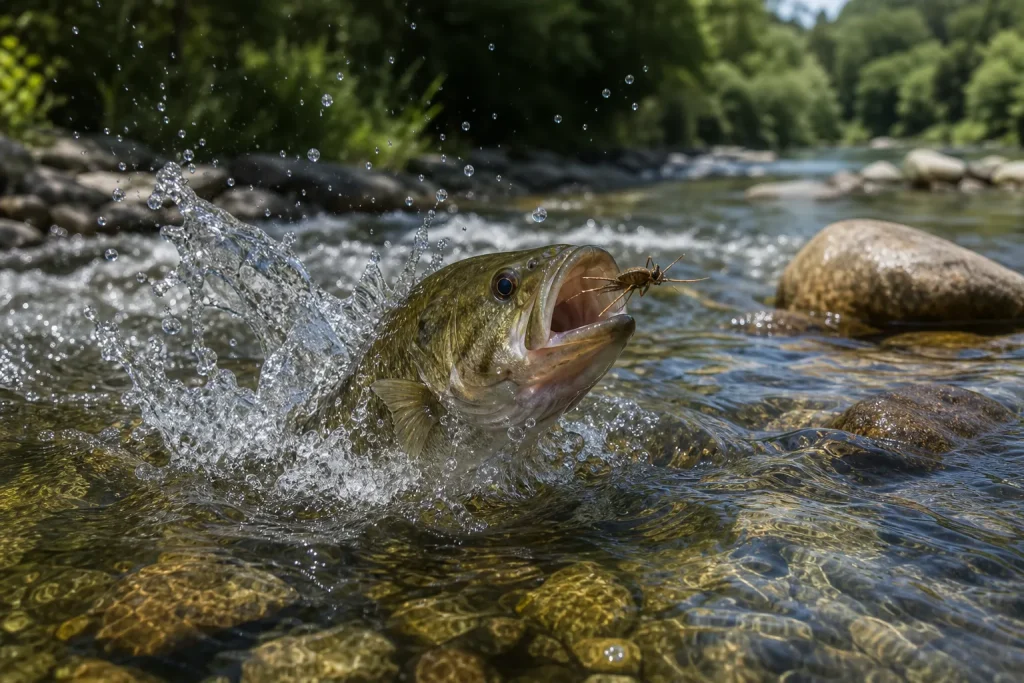
If you dream about the sexiest form of smallmouth fly fishing, it’s probably watching a bronze flank explode under a surface bug. Flies like Boogle Bugs and Mr. Wigglies imitate large terrestrial insects such as cicadas, and bass will absolutely crush them. The problem is that these patterns excel when drifting with the current from a boat, covering long stretches. On foot, the surface bite demands the right time and place.
Ott notes that topwater poppers and sliders often produce best in low-light windows—early morning and late evening. During the bright midday hours, smallmouths tend to slide deeper or tuck tighter to cover, making subsurface presentations far more reliable. That’s when a small Clouser Minnow, arguably one of the most effective smallmouth streamers ever tied, becomes indispensable. Cast it across the current, let it sink, and use short, sharp strips to imitate a fleeing baitfish. This pattern alone will catch fish in virtually any river situation.
The Overlooked Pattern: Crayfish Fished Like a Nymph
While many fly anglers reach for streamer patterns that mimic baitfish, Ott believes one of the most overlooked food sources is the crayfish—and imitating them correctly makes all the difference.
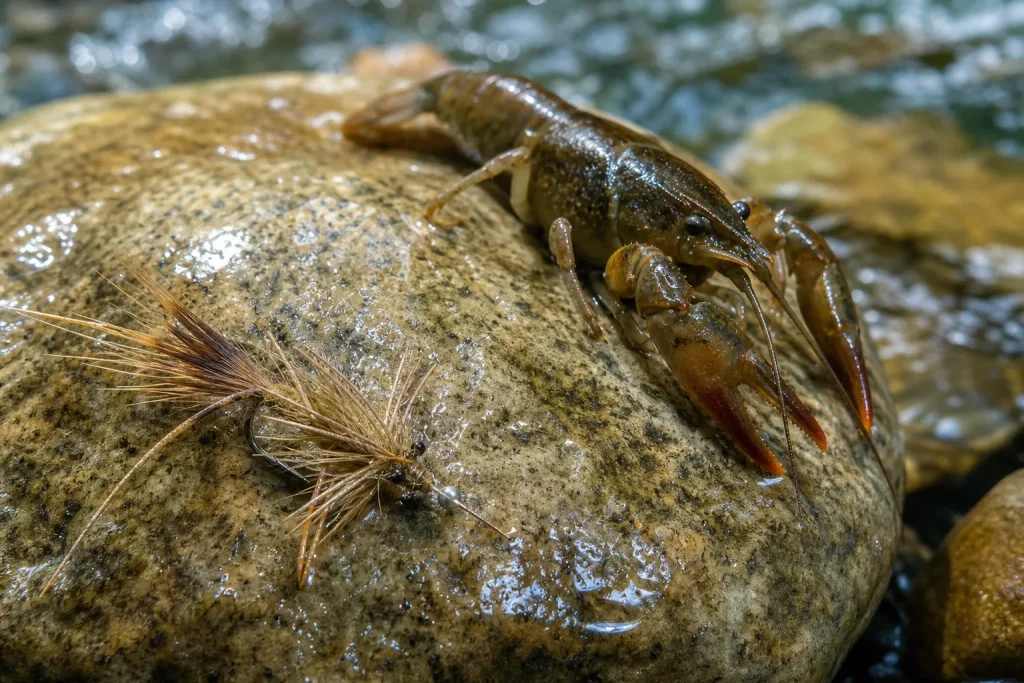
“The secret is you want to imitate a little crayfish,” he says. “One of my favorites is the Near Nuff Crayfish. You want to fish these like a nymph. Find a deep spot just below a riffle, chuck that thing out there, give it a mend, let the line belly out, and as it swings around give it some short strips so it looks like a fleeing crayfish.”
Heavily weighted crayfish patterns with big dumbbell eyes and full claws are designed to be stripped across the bottom and won’t drift naturally. Lightly weighted patterns measuring two inches or less are the money because they tumble realistically in current. When fished on a tight-line swing with occasional twitches, they perfectly mimic a crayfish darting backward along the streambed—a presentation that triggers even lock-jawed summer bass. Hyper-realism isn’t necessary; movement and placement matter far more than perfect silhouette.
Rod and Leader Setup: What You Already Own Will Work
Guides often recommend 7- and 8-weight fly rods for smallmouth from a boat, where wind and big flies demand extra power. For wade fishing, though, you can get the job done with the outfit you likely already own. Ott says a 6-weight is perfect for most wading situations, and even a 5-weight is entirely effective if you tailor your leader to turn over bulkier surface bugs.
“The longer your leader, the better,” he notes, “however, if you’re fishing a 5-weight, ditch the 9-foot light leader and swap it for something shorter and heavier, like a 7-and-a-half foot 1X or 2X. If you need tippet, a chunk of regular 10-pound monofilament is fine. By keeping your leader more compact you’ll turn over a Boogle Bug or Dahlberg Diver with no problem.”
That leader adjustment is critical. Longer, lighter leaders designed for delicate dry-fly trout presentations will collapse under the air resistance of a bulky deer-hair bug, causing the fly to land in a heap. A shorter, stouter leader transfers energy more efficiently, allowing those big surface patterns to land with a satisfying plop right against the bank or next to a mid-river boulder.
[Internal Link: Lure Selection]
The Summer Shift: Oxygen and Moving Water
Unlike trout, smallmouth bass are not entirely dependent on sky-high dissolved oxygen levels, but their location does shift as water temperatures climb. During the steamiest months of summer, don’t ignore faster, shallower riffles. These stretches provide more oxygen and concentrate terrestrial insects and disoriented baitfish—a steady conveyor belt of food.
According to Ott, riffles also serve as daytime feeding stations when deeper pools become uncomfortably warm. Even a thin, knee-deep chute with broken surface water can hold multiple fish if it offers enough cover and a nearby drop-off. This is where large attractor patterns like a Chubby Chernobyl or Stimulator shine. These common trout flies cast effortlessly on a 5- or 6-weight, and while they may not make as much noise as a cupped popper, they won’t go unnoticed if you’re delivering precise casts to those juicy buckets and ledges.
[Internal Link: Bass Fishing Lures]
Practical Fishing Tips
- Sneak into position: Smallmouths in clear, shallow water are spooky. Approach likely spots from downstream, wade quietly, and keep a low profile.
- Mend strategically: Upstream mends slow the fly’s drift, downstream mends speed it up. Use the current to swing a crayfish pattern naturally through a bucket.
- Carry a mix of densities: Pack a floating popper, a lightly weighted streamer, and an unweighted crayfish or nymph. Switching between them lets you probe the entire water column without changing rigs.
- Use a stripping basket: While wading, a basket keeps your fly line from tangling in current or wrapping around your legs, giving you cleaner casts and faster pickups.
- Keep fly changes quick: A small box with a handful of proven patterns reduces decision paralysis. You don’t need 50 flies—just the right three or four.
Common Mistakes
- Fishing water that’s too shallow and uniform: If you can see the bottom across the whole river with no deeper slots, keep walking. Smallmouths need depth changes to feel secure.
- Over-stripping poppers: A surface bug that moves too fast looks unnatural. Let it sit after the splash-down, then use subtle twitches rather than aggressive, constant stripping.
- Using heavy, over-weighted crayfish patterns: Big dumbbell eyes cause the fly to anchor on the bottom and kill the natural drift. Lightweight patterns that tumble in the current outperform them in wade-fishing scenarios.
- Fighting fish with the rod tip too low: A high rod tip keeps tension and absorbs sudden runs better, especially when you’re wading and can’t quickly reposition
Conclusion
Wade fishing for smallmouth bass with a fly rod strips away the complexity of boats and long floats, and returns the focus to water-reading skills, precise presentations, and a handful of confidence patterns. Whether you’re swinging a little crayfish through a deep slot, popping a Boogle Bug at sunset, or drifting a Clouser Minnow through a riffle, the fish are there for the taking if you commit to the wading game. Grab an old pair of wading shoes, rig up a 5- or 6-weight with the right leader, and start exploring that local stream you’ve been driving past. You might just discover that the best smallmouth water doesn’t require a boat at all.
FAQ
1. Do I need a drift boat to fly fish for smallmouth bass?
No. Many productive smallmouth rivers are accessible on foot. Wade fishing for smallmouth bass focuses on reading water carefully and placing precise casts into high-percentage spots like deep buckets and drop-offs.
2. What is the best fly rod weight for wading smallmouth streams?
A 6-weight is ideal for most situations. A 5-weight works too if you shorten and strengthen your leader to turn over larger surface flies. Seven- and 8-weights are better suited to boat fishing on big water.
3. What flies should I use when wading for smallmouth?
A small Clouser Minnow is a must-have streamer. For topwater, Boogle Bugs and foam terrestrials excel in low light. A lightly weighted crayfish pattern fished like a nymph is an often-overlooked secret weapon.
4. Why are crayfish patterns so effective for smallmouth?
Crayfish are a primary food source in many rivers. Fished with a dead drift and occasional short strips, a lightweight crayfish fly mimics a fleeing crustacean perfectly and triggers strikes from bass that ignore baitfish patterns.
5. Where do summer smallmouths go as the water warms?
As temperatures peak, smallmouths often move into faster, shallower riffles for better oxygen and a steady supply of food. Look for broken water with nearby deeper holding areas.